
Summer 2
As we begin our final term in Koala Class, we are excited to celebrate all that the children have achieved this year while continuing to build the skills and confidence they need for the next stage of their learning journey. This term will provide a range of engaging opportunities for the children to deepen their understanding, demonstrate their independence, and take increasing ownership of their learning.
Through exciting topics, practical experiences, collaborative activities, and meaningful discussions, the children will continue to develop their knowledge and skills across the curriculum. We will also focus on strengthening key learning in English and Maths, ensuring that every child feels confident and well-prepared for the transition into Year 2.
As the year draws to a close, we will encourage the children to reflect on their successes, embrace new challenges, and look forward to the exciting opportunities that lie ahead. Below you will find an overview of the key areas of learning and experiences planned for the term.
English
Poetry
This two-week poetry unit is designed for Year 1 students to develop their writing skills through creative and engaging experiences with poetry. Over the course of the unit, children will be immersed in a variety of simple poems, exploring language, rhythm, rhyme, and expression. They will build foundational skills in writing, including using capital letters for names, places, and the pronoun “I,” spacing between words, and punctuation such as full stops, question marks, and exclamation marks. Through listening to, reading, and discussing poems, students will develop ideas for their own writing, gradually progressing from short, simple lines to multi-line poems that express feelings, observations, or imaginative ideas. The unit combines creativity with the explicit teaching of Year 1 writing expectations, providing opportunities for children to compose, revise, and share their poems confidently with peers.
By the end of the 2‑week unit, pupils will be able to write simple poems that:
- Use correctly formed lower-case and capital letters.
- Include spaces between words.
- Begin with a capital letter and end sentences with a full stop, question mark or exclamation mark.
- Use “and” to join simple ideas.
- Use the pronoun “I”, and capital letters for names or places if used.
- Use their phonics knowledge to spell words, including common exception words when possible.
- Sequence simple sentences or poetic lines that make sense and reflect feelings, observations or experiences.
- Read their poems aloud with understood meaning.
Lost and Found by Oliver Jeffers
Oliver Jeffers’ Lost and Found is a charming story about a boy who discovers a penguin at his door and decides to help it find its way home. The book provides a perfect opportunity for children to explore narrative writing by engaging with themes of friendship, kindness, and adventure. Through this unit, children will develop their ability to write cohesive, engaging stories while applying foundational writing skills they have already learned. They will also build on these skills by incorporating more complex sentence structures, punctuation, and descriptive language.
Children write a narrative inspired by Lost and Found by Oliver Jeffers, applying foundational transcription knowledge and incorporating punctuation, grammar, sentence structure, and descriptive language.
The unit outcome will include the following:
- Transcription and Spelling
- Applies all previously learned spelling and phonics knowledge accurately.
- Uses correct letter formation and spacing between words.
- Sentence Structure and Grammar
- Writes complete sentences with correct punctuation.
- Uses singular and plural nouns appropriately.
- Introduces simple past tense correctly to describe events.
- Extends sentences using and to add more information.
- Punctuation
- Begins sentences with capital letters and ends with appropriate punctuation (full stops, question marks, exclamation marks).
- Uses capitals for proper nouns (e.g., Penguin, Boy, Lost and Found).
- Uses question marks for questions and exclamation marks for emphasis.
- Descriptive Language
- Uses adjectives to describe nouns (e.g., small penguin, cold sea).
- Includes descriptive phrases to enhance storytelling and engage the reader.
- Narrative Structure
- Includes a clear beginning, middle, and end.
- Demonstrates events in a logical sequence.
- Shows character actions, feelings, or dialogue to develop the story.
- Creativity and Engagement
- Writes an imaginative story inspired by the text.
- Engages the reader through character interactions, dialogue, and adventurous events.
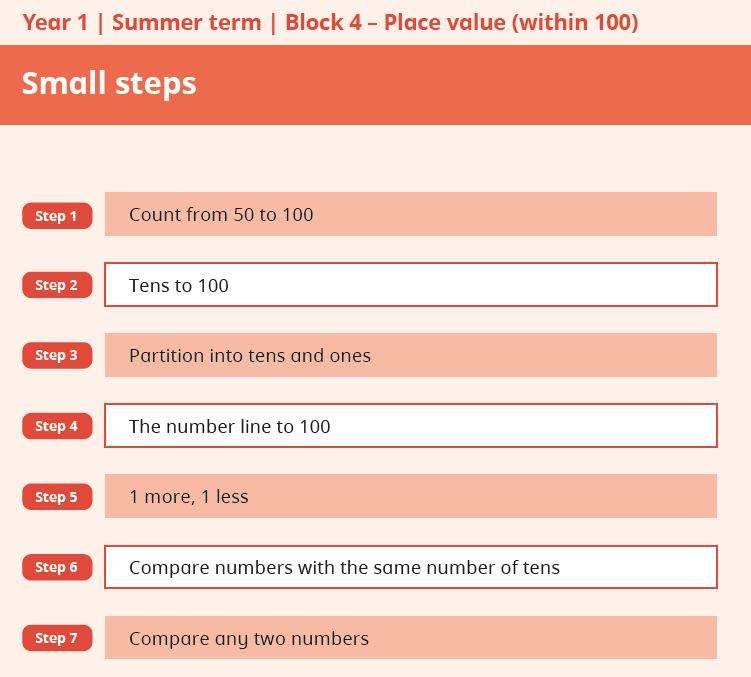
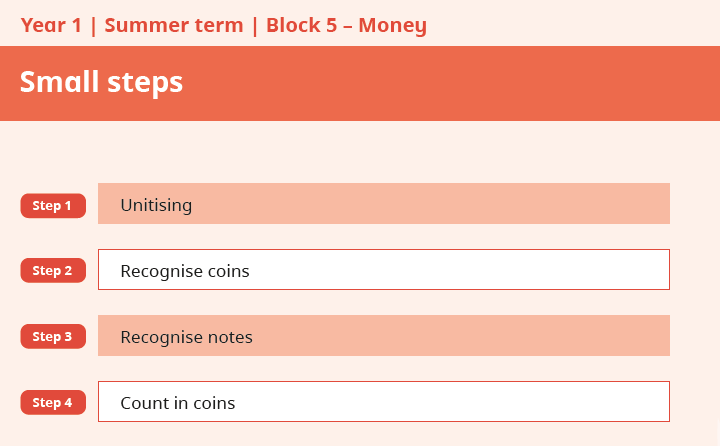
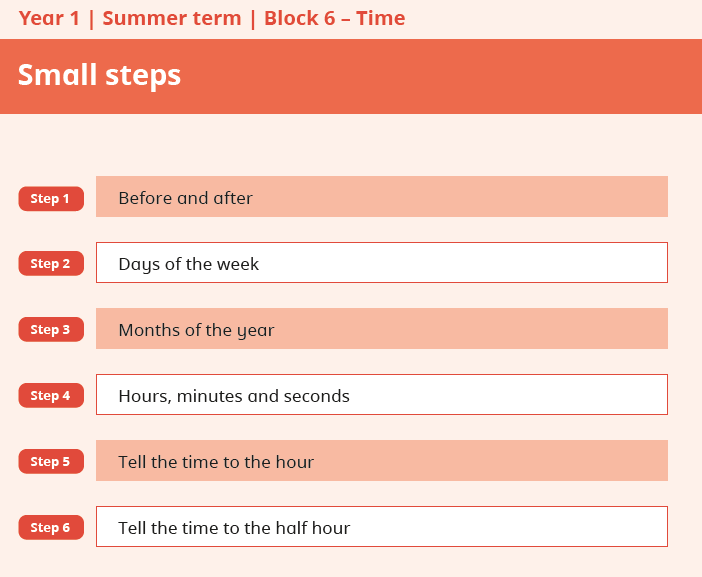
Maths
Science - Making Connections
Investigating science through stories
Consolidating knowledge of plants and animals through picture books and practical investigations.
Unit outcomes
Pupils who are secure will be able to:
- Identify the typical weather associated with each season.
- Describe animal features.
- Recognise similarities and differences between animals in the same animal group.
- Build an animal home with natural materials.
- Explain the difference between carnivores, herbivores and omnivores.
When working scientifically, pupils who are secure will be able to:
- Carry out online research to find answers to questions.
- Measure length in centimetres.
- Suggest how to carry out a waterproof test.
- Begin to recognise if a test is fair.
- Use data to answer questions.
- Recognise patterns in data.
- Group birds according to their diet.
Geography - What is it like to live in Shanghai?
Investigating the wider world by locating continents, oceans and countries beyond the UK, with a focus on China.
Unit outcomes
Pupils who are secure will be able to:
- Give examples of human and physical features.
- Identify features they see on a walk.
- Explain the location of features using some directional language.
- Use an aerial photograph to locate physical and human features.
- Draw simple pictures or symbols on a sketch map.
- Draw compass points.
- Name the continent they live in.
- Use an atlas to locate the UK and China on a world map.
- Use an atlas to locate Europe and Asia on a world map.
- Identify China’s physical and human geography.
- Sort physical and human features using photographs.
- Identify physical and human features in images of Shanghai.
- Compare Shanghai to their locality.
- Identify similarities and differences between human and physical features.
DT: Textiles (Puppets) and Mechanisms (Wheels and Axles)
Textiles: Puppets
Developing textile skills to design and create hand puppets based on characters from a well-known fairytale.
Unit outcomes
Pupils who are secure will be able to:
- Join fabrics together using pins, staples or glue.
- Design a puppet and use a template.
- Join their two puppets’ faces together as one.
- Decorate a puppet to match their design.
Mechanisms: Wheels and axles
Developing an understanding of how wheels, axles and axle holders work while practising cutting straight and curved shapes with scissors.
Unit outcomes
Pupils who are secure will be able to:
- Choose and use the most suitable tool for cutting out different shapes accurately.
- Test and compare wheels of different shapes, thicknesses and smoothness.
- Estimate the middle of a circle.
- Design, draw and label a product that uses a simple mechanism.
- Identify the needs of the user.
- Make and finish a simple pull-along toy.
- Evaluate a product against simple design criteria and provide feedback.
Music - Musical Symbols (Theme: Under the Sea)
Exploring the depths of the sea through music, movement, musical symbols and tuned percussion instruments.
Unit outcomes
Pupils who are secure will be able to:
- Move to reflect a character.
- Create sounds to reflect a character
- Move at a speed that reflects the tempo of the audio.
- Respond to dynamic changes without prompting.
- Demonstrate a sound pattern correctly to a pulse.
- Sing and play high and low sounds.
- Read symbols representing high and low sounds correctly.
- Demonstrate an awareness of pitch, rhythm and dynamics within a performance and recognise the symbols representing these.
PSHE - Citizenship and Transition
Unit outcomes
Pupils who are secure will be able to:
- Explain why the class and school rules are important.
- Discuss the different needs of a range of pets.
- Describe some of the needs of babies and young children.
- Recognise some similarities and differences between themselves and others.
- Identify some groups which they belong to.
- Recognise that different individuals belong to different groups.
- Explain why voting is a fair way to make a decision involving a lot of people.
Year 1: Transition lesson
Helping Year 1 pupils with the transition to a new year and the changes that come with it.
Computing - Data Handling (Introduction to data) and Online Safety Review
Learning what data is, why it is useful and the different ways that it can be gathered and recorded both by humans and computers.
Unit outcomes
Pupils who are secure will be able to:
- Represent animal-themed data in different ways, using objects and technology.
- Log in and use mouse and keyboard skills to navigate the computer.
- Represent the same data as a pictogram and a table or chart.
- Collect data about minibeasts using a tally chart and represent data digitally.
- Click and drag objects to sort data using a branching database.
- Consider the types of input used to gather different forms of data when designing an invention.
PE
This term children will be developing their PE skills and knowledge in Striking and Fielding and Invasion Games.