
Summer 1
SATs and SATs Revision
This term the Year6 children will be sitting their SATs tests.
The SATs are May 11th - May14th:
- Monday 12th - Spelling, Grammar and Punctuation
- Tuesday 13th - English Reading
- Wednesday 14th - Maths Arithmetic and Reasoning Paper 1
- Thursday 15th - Maths Reasoning Paper 2
During SATs week, children are invited to arrive at school early for 'Tea and Toast' to prepare themselves the that days tests - provided for by the school.
For any families that would like to undertake any revision with your children the following are available.
www.maths.co.uk - there are a range of assessments for the children to do on here.
www.spag.com - there are a range of assessments for the children to do on here.
https://www.cgpbooks.co.uk/primary-books/ks2/maths-english/em6cub25-ks2-year-6-english-maths-essentials - These 3 books provide children with the knowledge and revision activities they need in preparation for SATs.
English
Tyger
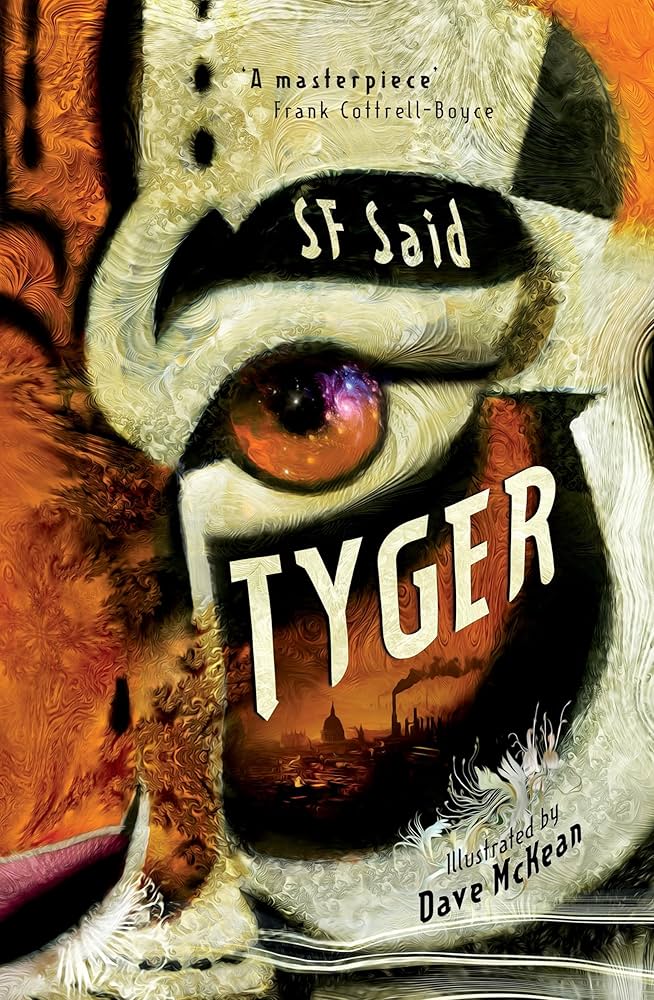
Tyger by S.F. Said is a powerful and mysterious story set in an alternative London, where nothing is quite as it seems. We follow Adam Alhambra, a quiet boy who prefers to stay unnoticed—until one day he sees something impossible: a tiger moving through the shadows. From that moment on, Adam is drawn into a dangerous adventure filled with secrets, courage, and the fight against a dark and controlling world. As he begins to question everything around him, Adam discovers that even the smallest voice can make a difference.
This exciting and thought-provoking novel is perfect for Year 6 pupils. It is packed with rich, descriptive language, vivid imagery, and powerful themes that will inspire children’s own writing. Throughout our study of the book, pupils will explore the author’s use of suspense, characterisation, and atmosphere, using these as a model for their own work. They will begin by writing shorter pieces, such as diary entries and descriptive paragraphs, before building up to a longer extended narrative inspired by the story. Tyger offers a fantastic opportunity for children to develop their creativity, expand their vocabulary, and grow in confidence as writers.
Maths
In the lead up to SATs the children will be finishing the maths curriculum - this includes the topics:
- Shape
- Statistics and Data
- Position and Movement (moving shapes on an axis inc. translation, reflection and rotation.)
- Recapping our year of learning
Guided Reading
This term the children will be looking at the book 'Tyger' by S.F Said

This term in Year 6 guided reading, we will be exploring Tyger by S.F. Said, with a strong focus on understanding authorial intent and the purpose behind the writer’s choices. Pupils will be encouraged to think deeply about why the author writes in a particular way, considering how language, structure, and narrative decisions shape the reader’s experience. We will explore why characters are introduced at specific moments, how their personalities are revealed and developed, and the impact this has on the story as a whole. Through discussion and close reading, children will learn to justify their ideas using evidence from the text, developing both their comprehension skills and their ability to think critically about literature.
Design Technology
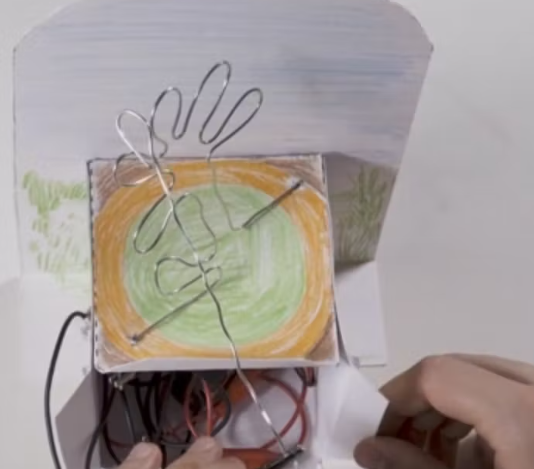
Design and Technology - Steady Hand Game
This term in Design and Technology, Year 6 pupils will be taking on the exciting challenge of designing and creating their own Steady Hand Game. Throughout the unit, children will explore both the form (what a product looks like) and function (how it works), developing an understanding of how successful products combine both effectively. They will begin by evaluating existing toys, discussing what they like and dislike and considering the skills different toys help to develop. Using this knowledge, pupils will carry out their own surveys before identifying the key components needed to create a steady hand game.
Building on this, children will design their own game based on clear criteria, using four different perspective drawings to communicate their ideas. They will then bring their designs to life by constructing a secure base with neat, carefully finished edges, ensuring it reflects their original concept. A key part of the project will involve creating and testing a working electrical circuit, which will be assembled neatly within their game. By the end of the unit, pupils will have developed valuable skills in designing, making, evaluating, and problem-solving, resulting in a fully functioning steady hand game they can be proud of.
|
Science Energy, circuits batteries and switches |
|
This term in Year 6 Science, our focus is on Energy: Circuits, Batteries and Switches, building on pupils’ understanding of electricity from the National Curriculum. Children will develop their knowledge of how electrical circuits work, recognising the importance of complete loops, power sources and components. They will explore the function of key electrical components, including bulbs, buzzers, motors, batteries and switches, and learn how these work together within a circuit. Pupils will investigate how changing the number of components affects brightness and resistance, and understand that batteries provide voltage, which can be increased by adding more cells to make bulbs shine more brightly. They will apply this knowledge to predict and explain what happens in different circuit setups, as well as design and build their own working circuits with switches to solve real-life problems. Alongside this, pupils will continue to develop their working scientifically skills. They will learn to draw accurate circuit diagrams using standard symbols, plan fair tests by identifying variables, and present their findings clearly in well-structured results tables with appropriate units. Through practical investigations and thoughtful discussion, children will deepen their understanding of electricity while developing key enquiry, reasoning and problem-solving skills.
|
|
Geography This term we are continuing with our energy project |
|
In this Geography unit, pupils will explore where energy comes from, why it is important, and how it is transported and used in the United Kingdom and around the world. Pupils will develop their understanding of the role energy plays in everyday life and consider how energy production and transport affect people and places. Pupils will begin by learning about the significance of energy and why it is essential for homes, transport, industry and technology. They will identify and describe a range of energy sources and explore how energy resources are traded and transported along global routes. The unit will introduce the difference between renewable and non-renewable energy sources. Pupils will discuss the benefits and drawbacks of different types of energy, considering factors such as sustainability, environmental impact and reliability. They will also think carefully about where energy sources are located and justify why certain locations are suitable for energy production. As part of developing their geographical skills, pupils will learn about the importance of the Prime Meridian and how it helps us locate places around the world. They will practise identifying human features using digital maps and develop their map-reading skills by locating major UK cities. Pupils will also explore how transport links have changed over time and how these changes have affected the movement of energy resources and people. They will build their fieldwork and mapping skills by using six-figure grid references to identify features on an Ordnance Survey map and by plotting points on a sketch map. To deepen their understanding of how energy is used locally, pupils will design and use interview questions to gather information from others. They will then present and interpret the information they collect. By the end of the unit, pupils will have a stronger understanding of where energy comes from, how it is transported, and the challenges and choices involved in meeting the world’s energy needs. They will also develop important geographical skills including map reading, data collection and interpreting information. |